 Posted by
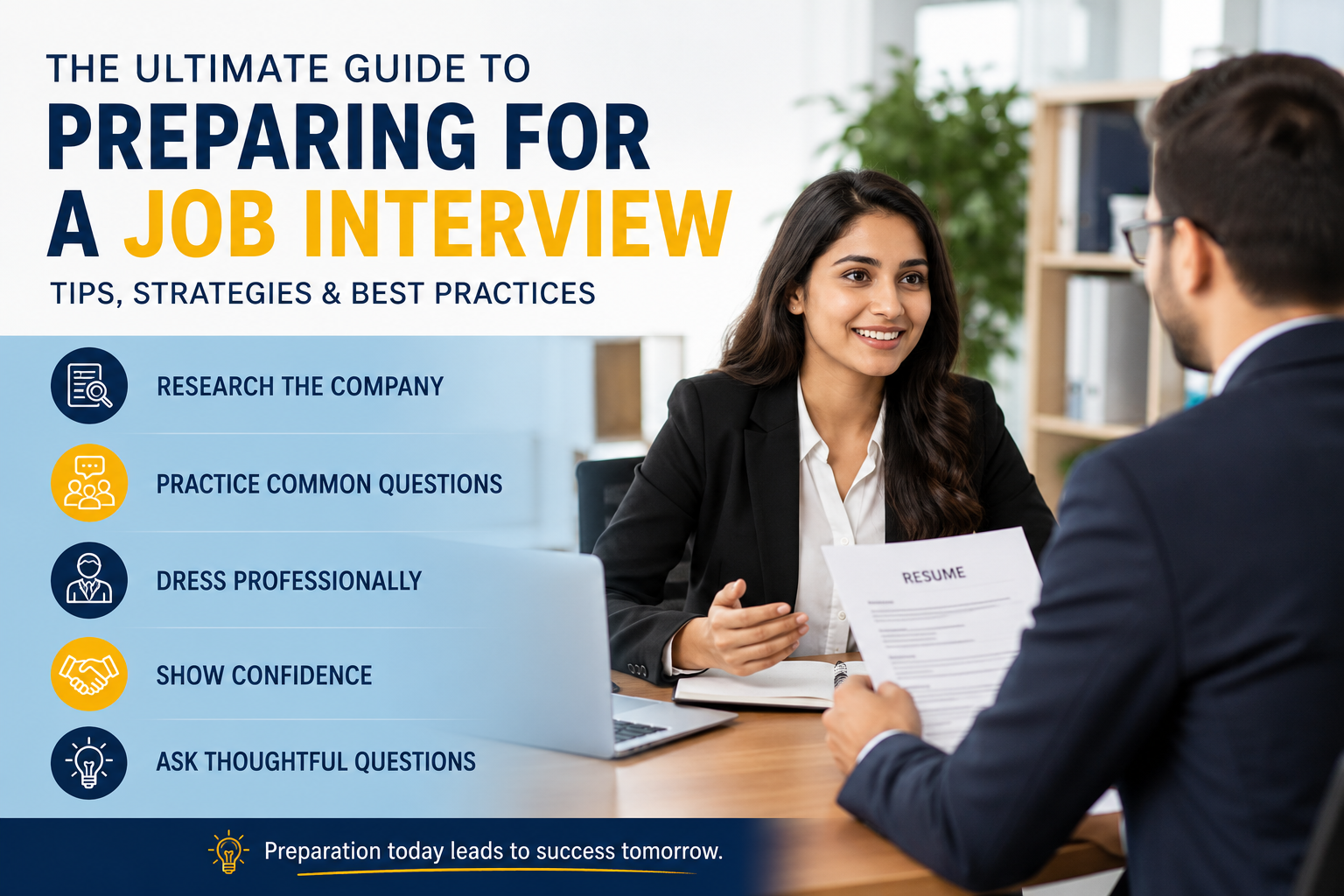
 Job interviews can be exciting and nerve-wracking at the same time. Regardless of whether you are applying for your first job, switching careers, or seeking a promotion, proper interview preparation can dramatically improve your chances of success.
Many candidates fail interviews not because they lack skills, but because they fail to prepare adequately. Employers look for more than qualifications—they evaluate confidence, communication skills, problem-solving abilities, and cultural fit.
In this comprehensive guide, you’ll learn practical strategies to prepare effectively and perform confidently during your next job interview.
Why Interview Preparation Matters
An interview is your opportunity to showcase your experience, personality, and professional potential. While your resume gets you shortlisted, your interview performance often determines whether you receive the job offer.
Preparation helps you:
- Build confidence.
- Reduce anxiety and nervousness.
- Communicate your strengths clearly.
- Answer questions more effectively.
- Create a positive impression on employers.
Candidates who prepare thoroughly are generally more relaxed and perform significantly better during interviews.
Step 1: Understand the Job Role Thoroughly
Before attending any interview, carefully study the job description.
Pay attention to:
- Required qualifications.
- Technical skills.
- Job responsibilities.
- Experience requirements.
- Soft skills mentioned.
Identify keywords such as leadership, communication, teamwork, project management, analytical skills, or customer service.
Next, compare these requirements with your own experience. Prepare examples that demonstrate how you have successfully handled similar responsibilities in previous roles.
Understanding the role allows you to tailor your answers according to the employer’s expectations.
Step 2: Research the Company
One of the most common interview mistakes is attending without researching the company.
Interviewers often ask:
“What do you know about our company?”
Failing to answer this question can negatively affect your chances.
Research the following information:
Company Background
Learn about:
- Company history.
- Founders.
- Headquarters location.
- Products and services.
- Industry position.
Company Values and Mission
Most organizations publish their mission and values on their website. Understanding these helps you align your answers with the company’s culture.
Recent News and Developments
Check for:
- New product launches.
- Awards and recognitions.
- Acquisitions.
- Expansion plans.
- Recent announcements.
Demonstrating awareness of recent developments shows genuine interest and enthusiasm.
Step 3: Practice Common Interview Questions
Although every interview differs, certain questions appear in almost every interview process.
Tell Me About Yourself
This is often the opening question.
Structure your answer using the Present-Past-Future approach:
- Present: Explain your current role.
- Past: Briefly discuss previous experience.
- Future: Describe your career goals and why this opportunity interests you.
Keep your answer concise, professional, and relevant.
Why Do You Want to Work Here?
Employers want to know whether you are genuinely interested.
Avoid generic responses such as:
“I need a job.”
Instead, mention:
- Company reputation.
- Growth opportunities.
- Alignment with your career goals.
- Interest in the company’s products or mission.
What Are Your Strengths?
Select strengths relevant to the position.
Examples:
- Communication skills.
- Leadership abilities.
- Analytical thinking.
- Time management.
- Problem-solving skills.
Support your answer with examples from your experience.
What Is Your Biggest Weakness?
Choose a genuine weakness that you are actively improving.
For example:
“I used to struggle with delegating tasks because I preferred handling everything myself. However, I’ve learned to trust team members and distribute responsibilities more effectively.”
Avoid mentioning weaknesses that directly impact the role.
Step 4: Prepare for Behavioral Questions
Many employers use behavioral interview questions to evaluate how candidates handled past situations.
Examples include:
- Describe a challenging situation you faced at work.
- Tell us about a conflict with a colleague.
- Describe a time when you demonstrated leadership.
- Explain a situation where you failed and what you learned.
The best way to answer behavioral questions is by using the STAR method.
STAR Method
Situation: Describe the context.
Task: Explain your responsibility.
Action: Discuss the steps you took.
Result: Share the outcome.
For example:
Question: Tell me about a time you solved a difficult problem.
Answer:
“In my previous role, our website’s lead generation suddenly dropped by 30%. I analyzed campaign data, identified tracking issues, corrected conversion settings, and optimized underperforming ads. Within three weeks, lead volume increased by 40%, exceeding previous performance levels.”
Structured answers demonstrate professionalism and clarity.
Step 5: Prepare Questions for the Interviewer
Interviews are a two-way conversation.
Most interviewers ask:
“Do you have any questions for us?”
Always prepare thoughtful questions.
Examples include:
- What does success look like in this role?
- What are the team’s current priorities?
- How is employee performance measured?
- What opportunities exist for professional development?
- What are the next steps in the hiring process?
Avoid asking only about salary, leave policies, or benefits during the initial interview unless the interviewer brings them up.
Step 6: Dress Professionally
First impressions matter.
Your appearance should reflect professionalism and respect for the interview process.
General guidelines include:
- Wear clean and well-fitted clothing.
- Avoid overly casual attire.
- Maintain good grooming.
- Choose simple accessories.
For corporate roles, business formal attire is usually appropriate. For startups or creative industries, business casual may be acceptable.
When uncertain, it is better to be slightly overdressed than underdressed.
Step 7: Practice Non-Verbal Communication
Communication extends beyond words.
Interviewers observe:
- Eye contact.
- Facial expressions.
- Posture.
- Hand gestures.
- Confidence.
Positive body language can significantly strengthen your impression.
Remember to:
- Smile naturally.
- Sit upright.
- Maintain appropriate eye contact.
- Listen attentively.
- Avoid excessive hand movements.
- Refrain from checking your phone.
Confident body language demonstrates professionalism and self-assurance.
Step 8: Prepare for Virtual Interviews
Remote hiring has become increasingly common.
Before a virtual interview:
- Test your internet connection.
- Check microphone and camera functionality.
- Ensure proper lighting.
- Choose a quiet environment.
- Keep your background professional.
- Join the meeting a few minutes early.
Technical issues can disrupt interviews, so preparation is essential.
Step 9: Follow Up After the Interview
Many candidates overlook this important step.
Sending a thank-you email within 24 hours leaves a positive impression.
Your email should:
- Thank the interviewer for their time.
- Reiterate your interest in the role.
- Mention something specific discussed during the interview.
- Express enthusiasm about the opportunity.
A professional follow-up demonstrates courtesy and professionalism.
Common Interview Mistakes to Avoid
Avoid these mistakes during interviews:
- Arriving late.
- Speaking negatively about former employers.
- Interrupting the interviewer.
- Providing overly long answers.
- Failing to research the company.
- Appearing disinterested.
- Exaggerating qualifications.
- Not asking questions.
- Forgetting to follow up.
Even highly qualified candidates can lose opportunities due to these avoidable errors.
Final Thoughts
Interview success rarely happens by chance. It is the result of preparation, practice, and confidence.
By researching the company, understanding the role, practicing common questions, demonstrating positive body language, and communicating effectively, you can significantly improve your interview performance.
Remember that every interview is a valuable learning experience. Even if you do not receive an offer, analyze your performance, identify areas for improvement, and continue refining your interview skills.
With consistent preparation and a positive attitude, you can confidently approach your next interview and move one step closer to achieving your career goals.